

A Trip Report from Eric’s hike over the Continental Divide with friends on August 19, 2018
I’ve been visiting Rocky Mountain National Park with my family since I was a young child, and have always been simply drawn to the mountains and the adventure that awaits out in the alpine wilderness. Kelly and I have been consistently coming out to Estes Park together since 2012, and have been on a number of adventures of varying difficulties. Often after a long day of hiking, I’ll turn on the television to the local “Channel 8,” which features productions from Estes Park legend Nick Molle, as well as (of course) plenty of advertisements for the in-town businesses. One of Nick’s productions that still loops from time to time is a show called “A Walk in the Park,” which features some of the great hikes in Rocky, along with commentary from guide-book author and former park ranger Lisa Foster. Their special on Long’s Peak still captivates me as I re-live my first trip up that mountain with friends back in 2010, and recall how under-prepared I was for that journey! However, another hike that I had read about in Lisa’s guide book had been tugging at me as the next challenge I had to try—hiking from Bear Lake, the start of some of the most popular trails in the park, all the way over to Grand Lake on the other side of the park. When an episode of “A Walk in the Park” featured this journey, I was convinced that someday I needed to give it a shot.
We’ve been up Flattop Mountain and over to Hallett Peak numerous times, as its one of our favorite hikes (without carrying our children).

However, continuing the hike on to Grand Lake always seemed to be a bit of a stretch, both due to the distance, and just the logistics of arranging transportation back and forth over the mountain (at over 17 miles, it wasn’t a hike I wanted to turn around and repeat the next day). As we’ve had the truly immense joy of adding two beautiful young girls to our family in the past 4 years, some of these more difficult hikes had been shelved in favor of more kid friendly (or at least kid-carry friendly) destinations. Kelly is the best though, and after hearing me talk about this hike so much (probably to the point of driving her nuts), she finally told me that I needed to just plan the trip with some friends and make it happen. In August this year, we did just that.
A couple of general facts about this hike:
-Hike begins at the Bear Lake trailhead, which is extremely busy in the summer and fall months. Parking can be difficult to come by, but the early start required by this type of undertaking usually will guarantee a space.
-There are a few local shuttle services that will provide transportation back and forth from Grand Lake, but there are no park shuttles that go over Trail Ridge road, so individual arrangements must be made. We opted to drop a car off the night before over at the North Inlet trailhead (end of our hike) in Grand Lake. To leave a car overnight anywhere in the park, just make sure to get a free wilderness permit at one of the ranger stations (we obtained ours at the Kawaunechee Valley Visitors Center).
-As I’ll detail below, weather can be a wild card anytime you are heading above the tree-line, so a wide range of cold/wet weather gear is critical. Total elevation gain from Bear Lake to the summit of Flattop is roughly 2,850 feet, followed by a descent of roughly 3,800 feet to Grand Lake.
-Many people break this hike into a 2-day affair, camping at one of the numerous backcountry sites that are available on the second half of this trail, but we opted to travel more lightly and knock it all out in one day (which I honestly think is the easier approach given all of the elevation gain and decline involved).
-Though steep in a few places, this route is entirely a class 1 hike with no material amount of exposure to steep drop offs. Still, a poorly timed turned ankle 8-10 miles in would make for a rough day, so gear to survive overnight if needed is never a bad idea.
-We carried all of the water that we needed (roughly 3L per person) but there are plenty of places on the descent where a filter could be used to replenish supply.
On to the journey itself…
We set out for the trailhead at roughly 6:30am, hoping to get started shortly after 7:00. Everyone in our group had at least some high-elevation hiking experience, but you never know how altitude may impact aperson on any given day. After a bit of grumbling and the cynical remark “This is considered recreation, and fun, correct?” from one party member during the initial mile or so, everyone seemed to settle in to a comfortable pace.

Three of our group of five had been on the first several miles of this hike up to Flattop multiple times, so for us there were plenty of familiar landmarks along the way, but most notably the Dream Lake overlook at approximately 1.7 miles, and then the Emerald Lake overlook at roughly 3.5 miles in.
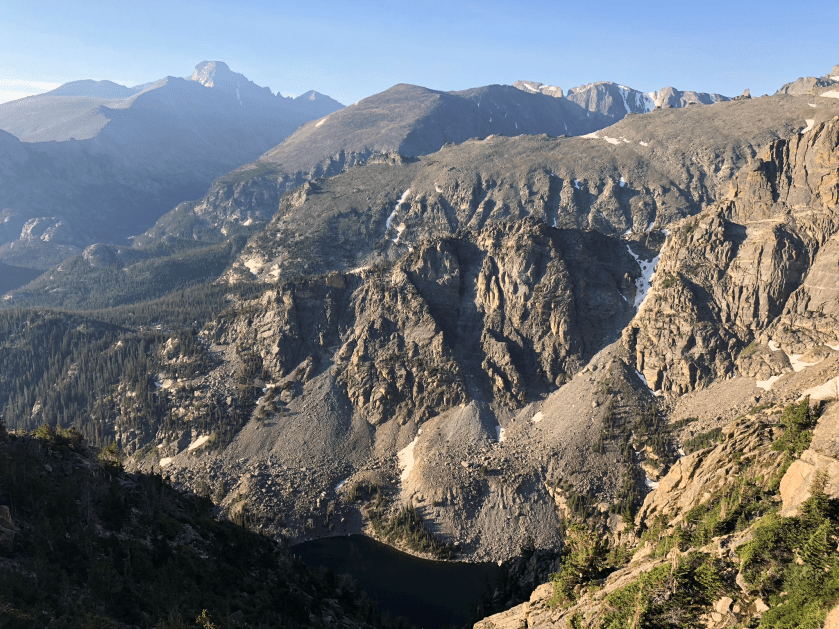
Unfortunately, we did not have the best of luck with weather for the early part of our trip, as we were hiking through a dense fog and some mist for the majority of our ascent. At approximately 4 miles in, we reached the hitch rack near the summit of Flattop, and took a more extended break with some snacks and plenty of water, knowing that the conditions were likely to be less than favorable for the next several miles up on the tundra. A little over two hours and twenty minutes into the hike, we reached the “summit” of Flattop mountain

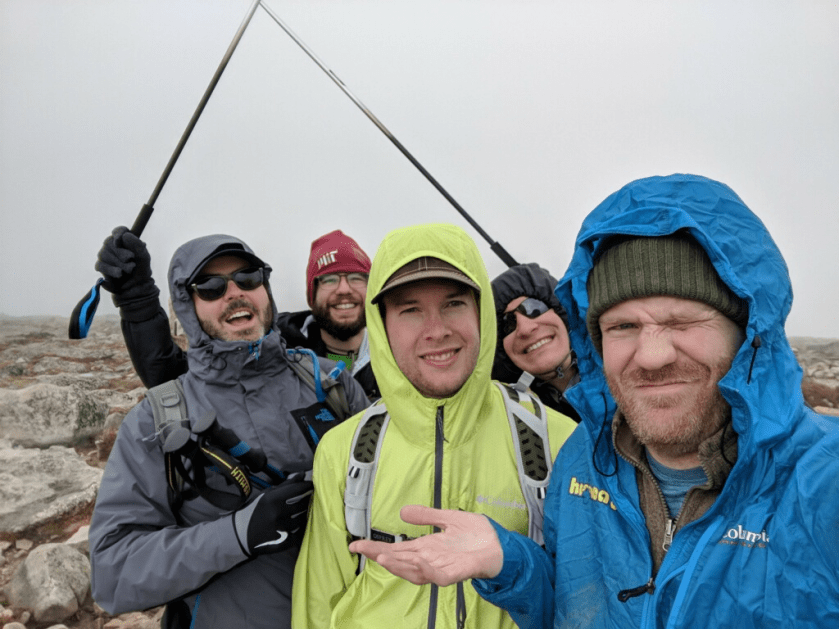
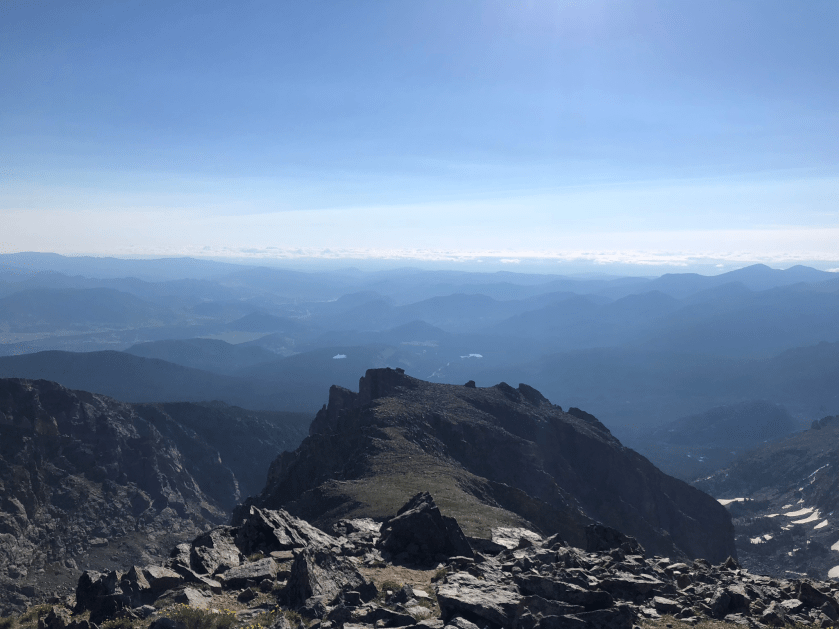
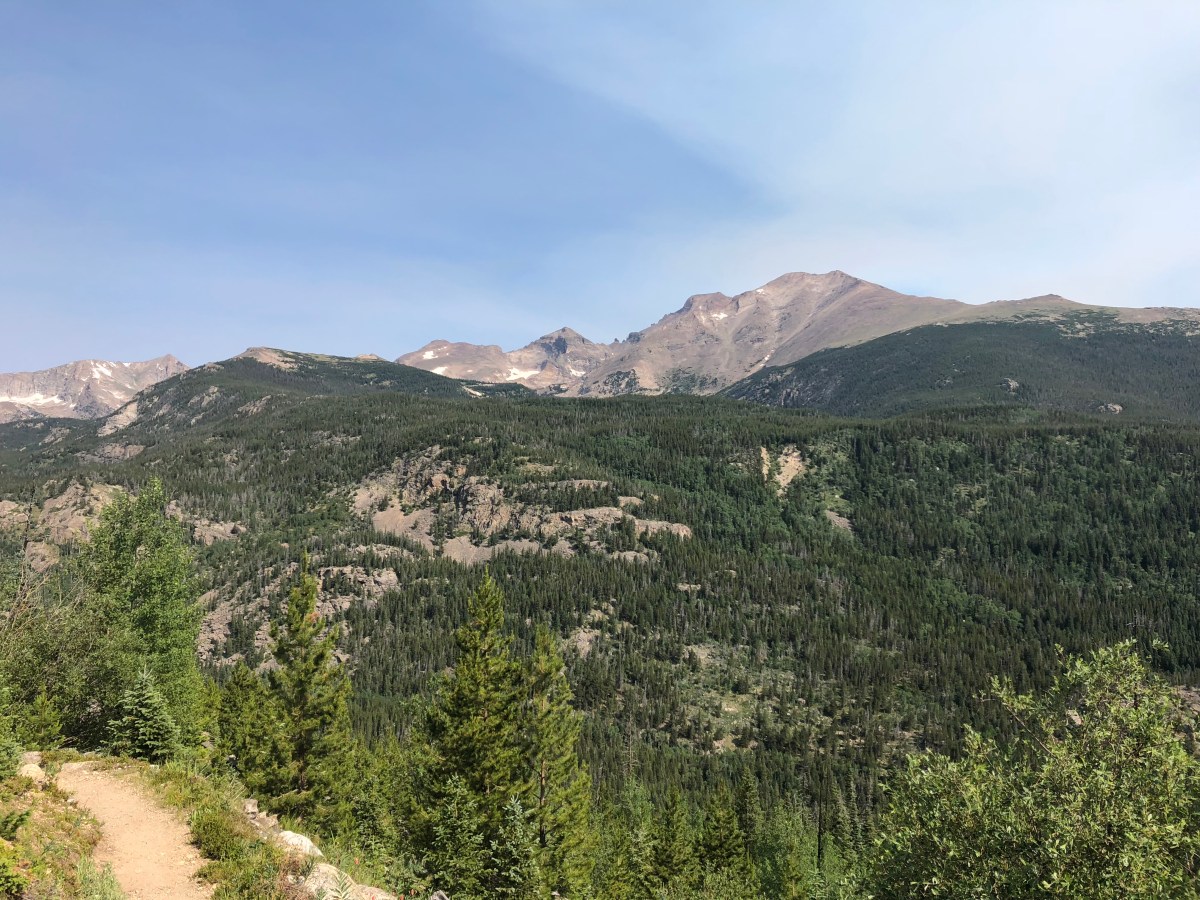
I always warn people that tell me they are heading up to Flattop, that as the name implies, the summit is very flat and thus the views are somewhat limited unless you make the extra .5 mile climb over to Hallett Peak. On this day, however, it would definitely not have been worth the extra work/scramble, as the fog was quite persistent. For comparison, here is a photo of the views that can be had from Hallett on a clear day—I took this picture just a few weeks before when I was training/researching the hike beyond the summit of Flattop.
From the summit of Flattop, we followed the clearly marked path to the North Inlet Trail Junction—which is identified with another sign and large cairn just a few tenths of a mile later.

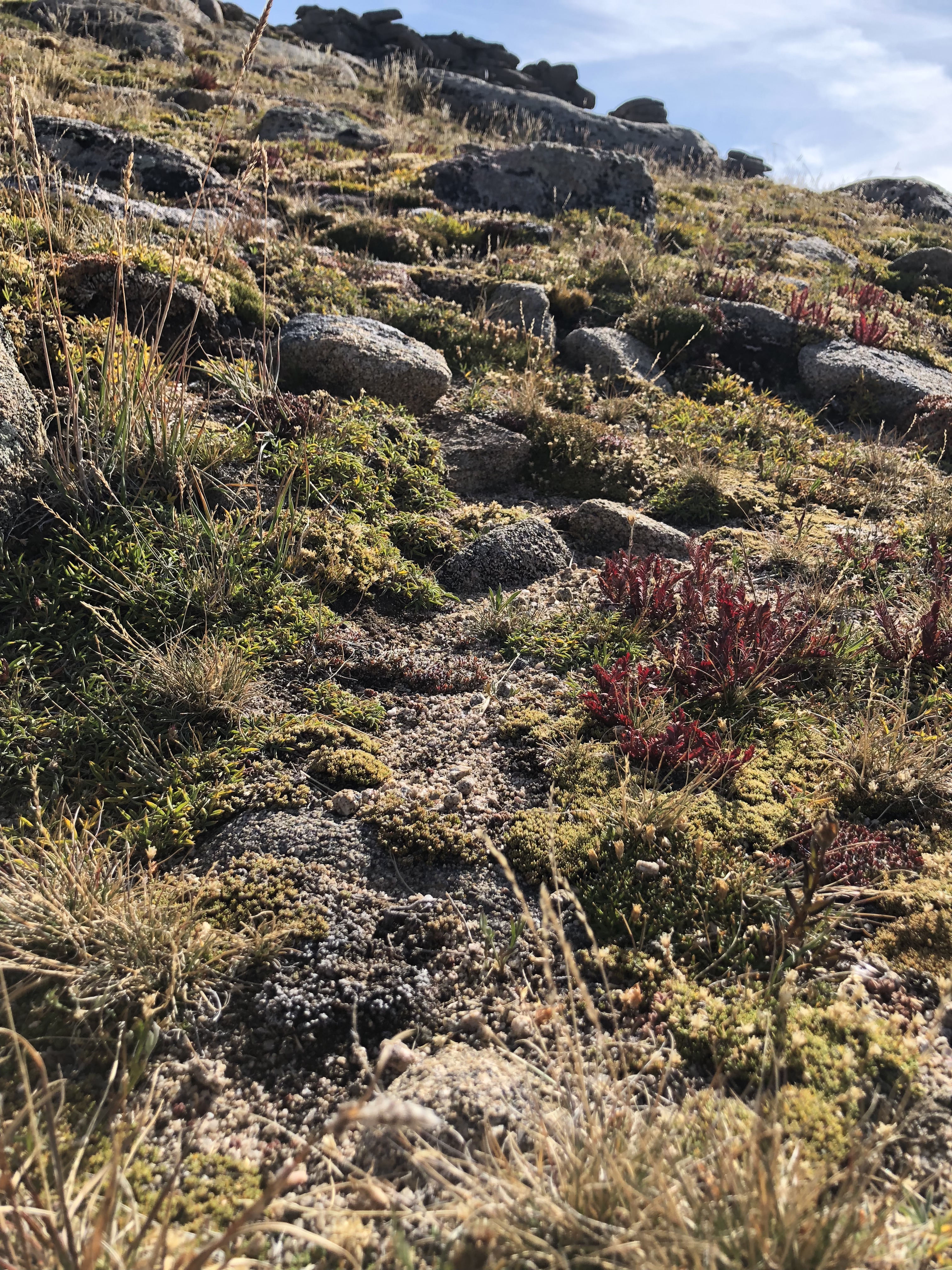
While I was disappointed for the group that we did not get to experience what I had anticipated to be sweeping views of the horizon as we continued onward across the Tundra on the North Inlet Trail, it was mystical in its own way to follow the seemingly endless trail through the fog with cairns marking the way in the distance.

We made relatively good time over this smooth terrain, as we were all a little chilly from the cold fog and mist. Thankfully there were no thunderstorms to contend with, as the time exposed dangerously above the tree line is significant during this portion of the trip. At roughly 6 miles / 3 hours into the hike, the terrain started to change slightly, as we got closer to the steeper descent down towards Grand Lake.

At approximately 6.8 miles, we crossed a stream and then began the section of the hike that I had been most anxious about: a mile of steep switchbacks.

I’d kept my trekking poles stowed thus far on the trip, but they were definitely a life-saver as we progressed through this somewhat more tedious but beautiful segment. Here we passed several other hikers carrying camping packs and heading in the other direction, which frankly looked brutal (all that weight and a quick 1000+ ft elevation gain).

At approximately 8 miles in, we crossed Hallett Creek, now fully back under the protection of the tree-line. While it was damp, our weather generally continued to hold, so we paused again for a bit longer of a break/re-fuel.

I’d been keeping an eye on the time and our pace with my Garmin GPS watch, and knowing that it was “all downhill from here” gave me some relief that we would be able to complete the trip and arrive in town well before the evening. The lack of elevation gain made it a lot easier for ourgroup (who had been largely quiet due to either lack of breath on the way up or chattering teeth walking across the tundra) to liven up and have the sort of silly debates/discussions that you undertake when you are together for 10+hours without much else to do. We almost missed this majestic bull elk along the trail as we plodded through the miles of well-groomed trail.

At around 6 hours/12 miles in, we stopped for our last extended break and got out “the good food” (apples, cheese, and summer sausage). At this point, all of us had tired legs but were generally in good spirits, even though we knew we still had another 5 or so miles to complete.
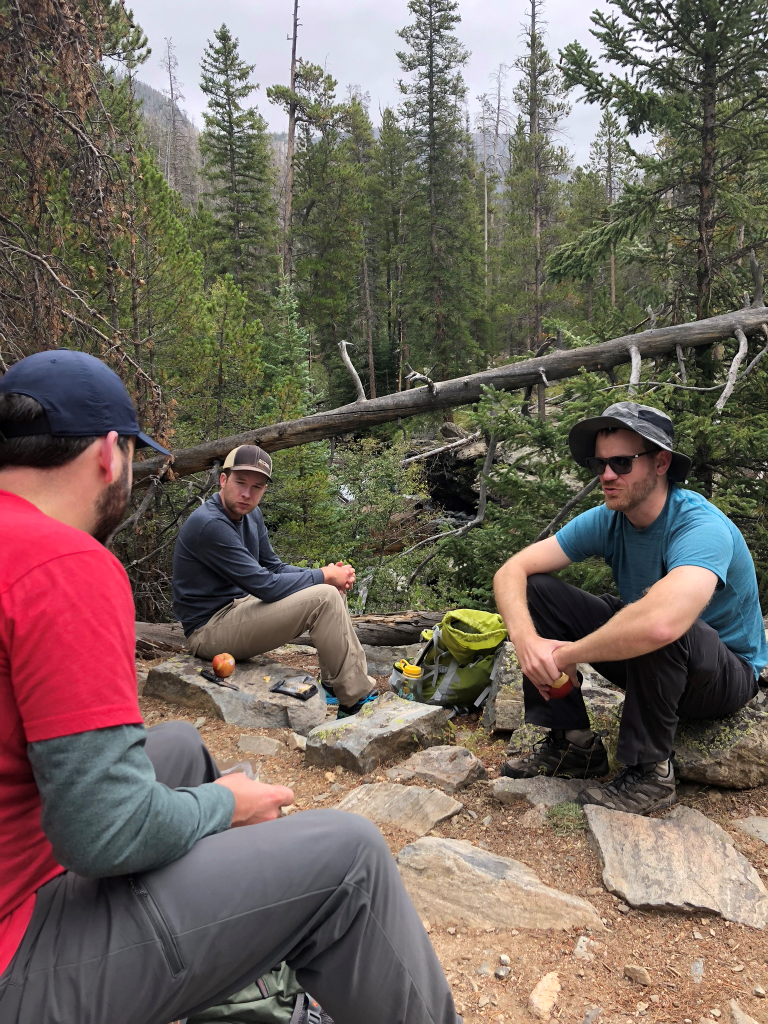
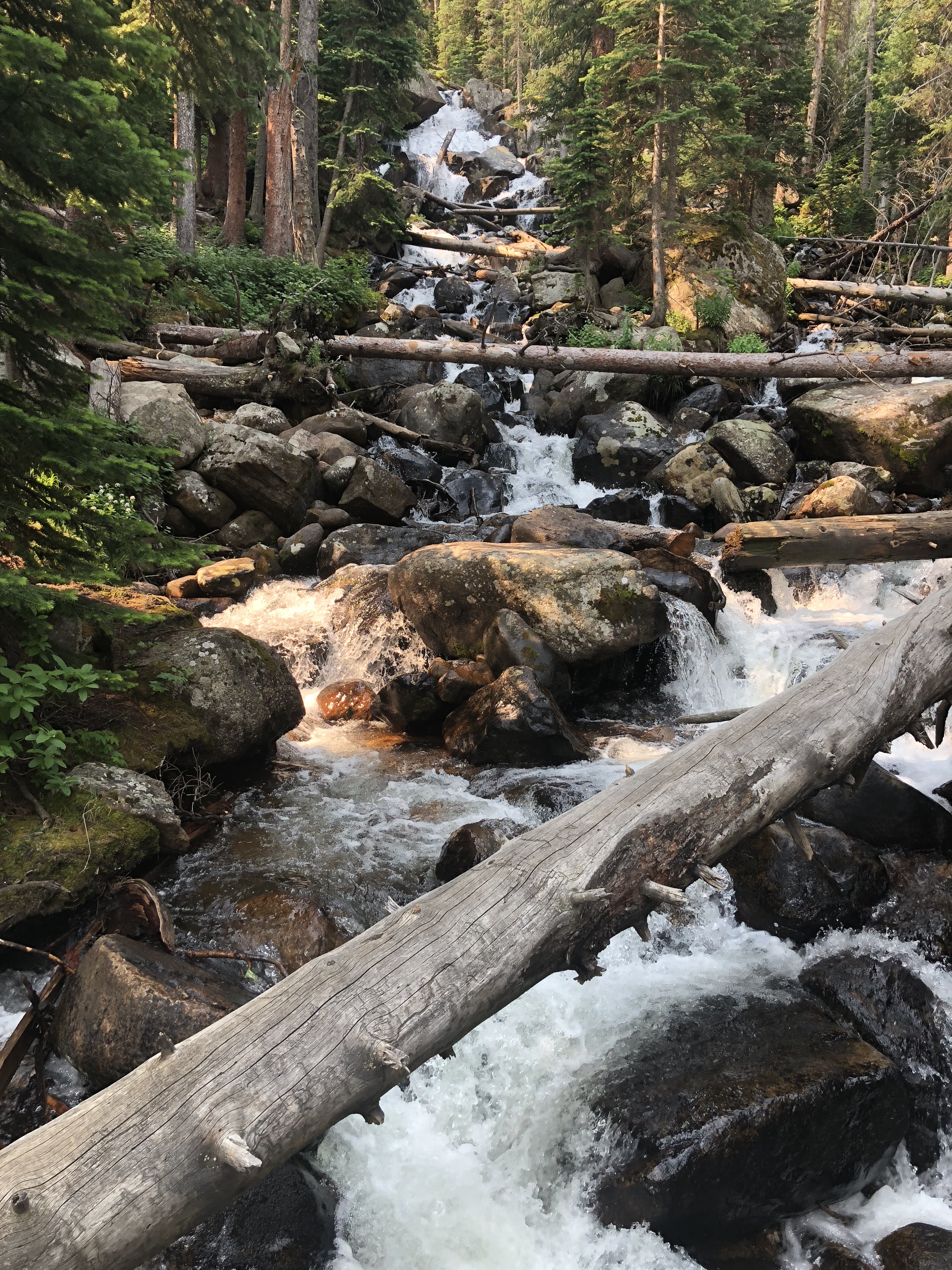
As we slowly descended into the valley, we ran into more and more day hikers, or others coming in to camp for the night. It was a pleasant leg of the trip, with the river running next to or near to us for much of the time. We passed Cascade Falls, a place I’d like to revisit sometime when we have more time to linger. At this stage, everyone was impressed, but not terribly interested in further exploration/deviation from the trail. Finally, as we neared the end of our journey and began seeing signs of civilization, we started discussing the most important part of the trip: where we would find the best pizza and beer in Grand Lake to celebrate.

My GPS hit 17 miles, and I’d hoped that meant we were almost finished. Unfortunately, between a bit of wandering and perhaps some inaccuracy, it was off by about a mile.

While that final mile was steady, easy terrain, it definitely felt like the most difficult of the trip, because even I was ready for this hike to be over. At last we emerged at the North Inlet trailhead, 8 hours and 28 minutes and (according to my watch) 18 miles later.
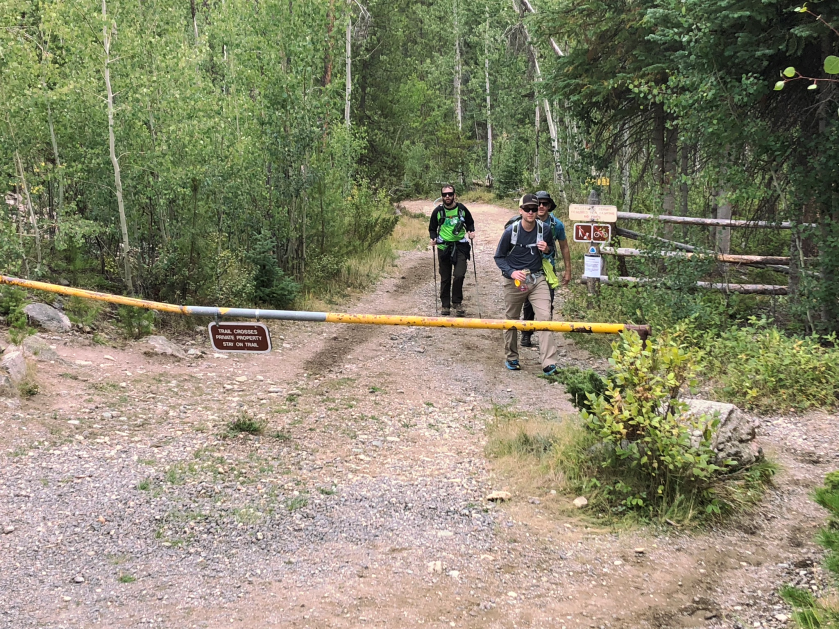
We all piled into my Explorer and headed into town for that long-desired pizza and beer at White Buffalo. While our journey was complete, I knew I had to keep my head on straight, as I had to drive us back over Trail Ridge road to pick up the rental car at Bear Lake, before we finally made it back to the condo for our full celebration. This was an epic trip for me and my friends. While it wasn’t nearly has harrowing as an exposed scramble on Long’s Peak, it was a great endurance challenge and incredible way to experience some of the more remote areas of the park (at least remote and trail accessible). If you are like me and incessantly research hikes like this before you undertake them, and have any questions that I didn’t address here, please don’t hesitate to comment below and I’ll do my best to answer them!







 rocky mountain tot