Rocky Mountain National Park Entrance Fee and Other Helpful Things to Know Before You Go

Save the Date! August 25th is the National Park Service’s birthday and that means entrance fees are waived in all U.S. national parks including Rocky Mountain National Park.
Rocky Mountain National Park Entrance Fee

rocky mountain national park entrance fee

Typically, the daily entrance fee for one vehicle is $25. You can buy an annual RMNP pass for $70. Our family buys an ‘America the Beautiful’ annual National Parks and Federal Recreation Lands pass which is $80. This is a great deal for us because we go to Rocky Mountain National Park often, and we also like visiting nearby Indian Peaks Wilderness Area which is managed by the U.S. Forest Service. Seniors, members of the military, and 4th grade students may be eligible for discounts. You can learn more about these and other pass options online on the national park service’s website.

rocky mountain National park timed entry permit

Starting summer 2020, a timed-entry permit is also required to enter Rocky Mountain National Park between the hours of 6:00 am and 5:00 pm. Permits are typically $2 per day and can be obtained on recreation.gov.

rocky mountain national park hours

The national park is open 24 hours per day every day of the year. Some facilities such as the park’s visitor centers have more limited hours. Current hours are 9:30 am to 4:30 pm. Some roads such as Fall River Road and Trail Ridge Road are open seasonally based on weather conditions.

rocky mountain national park trail conditions

Park rangers at the park’s visitors centers and professional local tour guides/rental companies are helpful resources to get an idea of what to expect out on the trails. You can also review trail condition reports on the national park’s website or on alltrails.com.

rocky mountain national park things to do

Our favorite activity in Rocky Mountain National Park is hiking. I wrote a post about how to decide the best hike for you called Where Should I Hike in Rocky Mountain National Park?

Best Day Hikes Rocky Mountain Natrional Park

We also enjoy going on picnics which I wrote about in Lunch with a View: 5 Great Spots to Enjoy a Picnic in Rocky Mountain National Park This Fall.

Keep an eye out for wildlife like moose, deer, bighorn sheep, and elk. Make sure to bring a good camera.

If you are visiting Rocky Mountain National Park during the winter, you can go sledding or snow-shoeing.

Additional activities include fishing, camping, rock climbing, and more! (additional fees, reservations, or permits may be required) No matter how many times we visit, we never run out of things to do in Rocky Mountain National Park.
Kayaking Grand Lake, Colorado

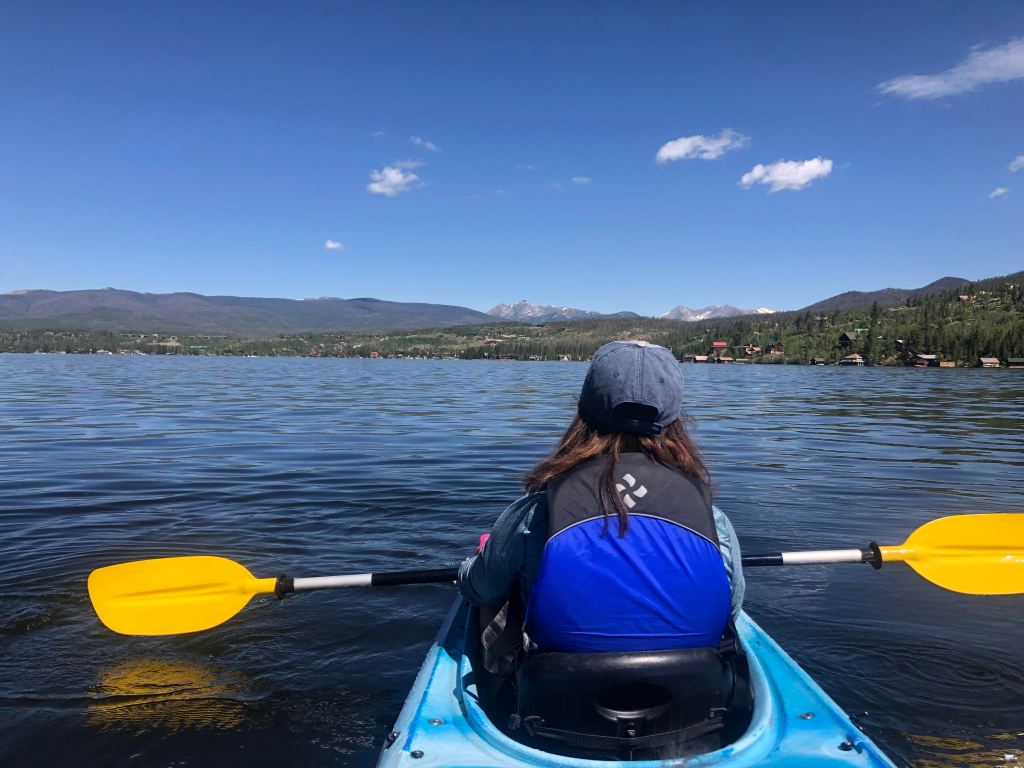
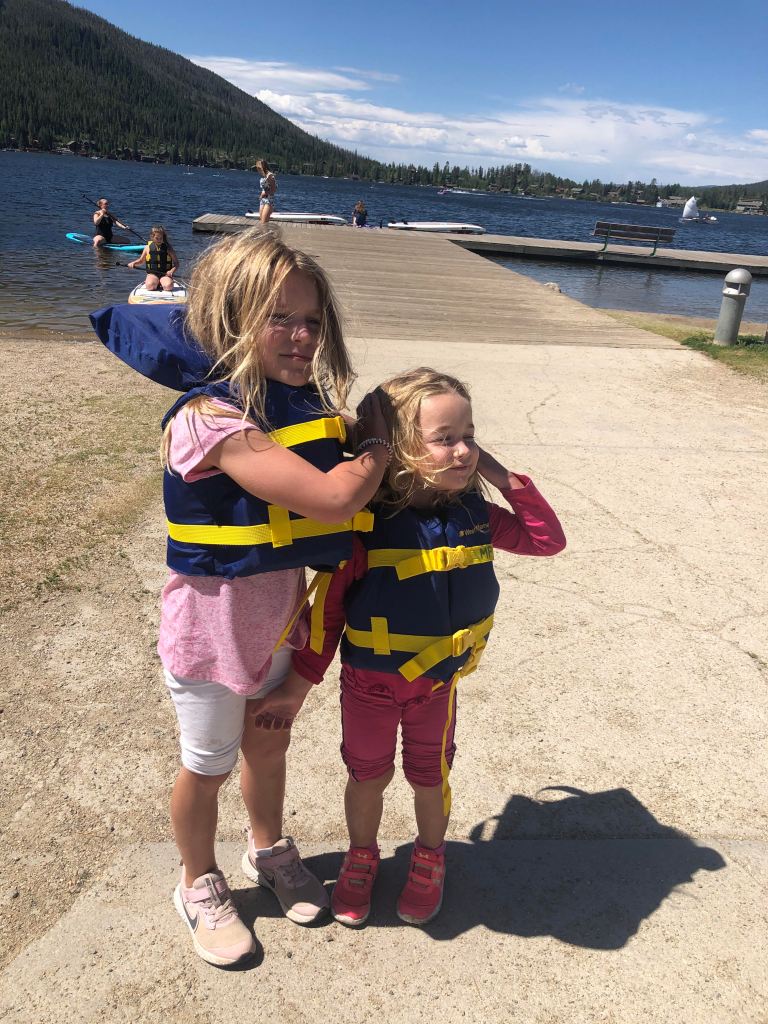
One of the highlights of our July trip to Colorado was renting a kayak on Grand Lake. We were staying at our cabin in Estes Park, Colorado so we drove over Trail Ridge Road through Rocky Mountain National Park to get to Grand Lake. A national park pass as well as a timed-entry reservation are required to drive this route. We stopped along the way to do a short hike up on the Tundra Communities Trail. The drive would take about an hour and a half without stops. On our drive to Grand Lake we spotted a couple of moose which is common in this area of the national park.

Grand Lake Colorado kayaking. Rent a kayak on Grand Lake.

renting a kayak on grand lake in Colorado

We rented a 15 foot tandem kayak for our family of four from Mountain Paddlers Kayak Shak. The kayak had enough room for two adults and our two small children.

Mountain Paddlers is located right on the lake. Rentals are first come, first served. We rented our kayak for one hour, which was a good amount of time for our first ride with the kids.

best time to go kayaking in grand lake

Mountain Paddlers is open from 8:00 am until 7:00 pm seven days a week from Memorial Day through Labor Day unless the weather is bad.

The rental came with floatation devices for everyone in the kayak as well as a safety whistle and dry bag.

kayaking lake estes vs. grand lake

Last summer we went kayaking on Lake Estes in Estes Park, Colorado. We enjoyed our time on the water. I wrote about our experience in this post.

Grand Lake is a bigger lake which means that there are more boats and some faster boats on the water with you. I enjoyed the natural landscape. As a HGTV fan, it was also fun to see the lake homes. Some of them are dream homes! Grand Lake is the largest natural lake in Colorado while Estes Park is man-made. Grand Lake also connects to Shadow Mountain Lake. We didn’t get that far, but I would like to extend our rental time in the future so we can explore Shadow Mountain Lake as well.

things to do in grand lake, Colorado

We worked up an appetite paddling, so once we were back on land, we ate lunch outdoors at a Mexican restaurant. We enjoyed dessert at an ice cream shop. Then we went on another quick hike before heading back towards Estes Park. I could not have asked for a better day trip. Want more ideas for things to do in Grand Lake? I wrote this post about Great Reasons to Visit Grand Lake, Colorado with Kids.

Hike Hollowell Park in Rocky Mountain National Park

Don’t you love a great backup plan? Our original plan for the day was to hike to Dream Lake, but when we arrived at the Bear Lake parking lot at 7:45 am it was already full. We started driving back down the mountain and found that Glacier Gorge parking was also full and so was Bierdstand Lake. We pulled into the Hollowell Park area hoping we could find a spot. We were relieved to find several parking spaces available.

Hollwell Park in Rocky Mountain National Park

On a previous trip, we hiked to the Mill Creek Basin and turned around to return the way we came. On this occation, we hiked a loop around Mill Creek Basin and then connected back up with the trail to return to the Hollowell Park trailhead.

Hollowell Park map
Photo of National Park Service map taken at trailhead. I highlighted over to show our route.
Mountain Views. Hollowell Park in Rocky Mountain National Park. To Mill Creek Basin. Loop trail
Longs Peak views

Hike to Mill Creek Basin

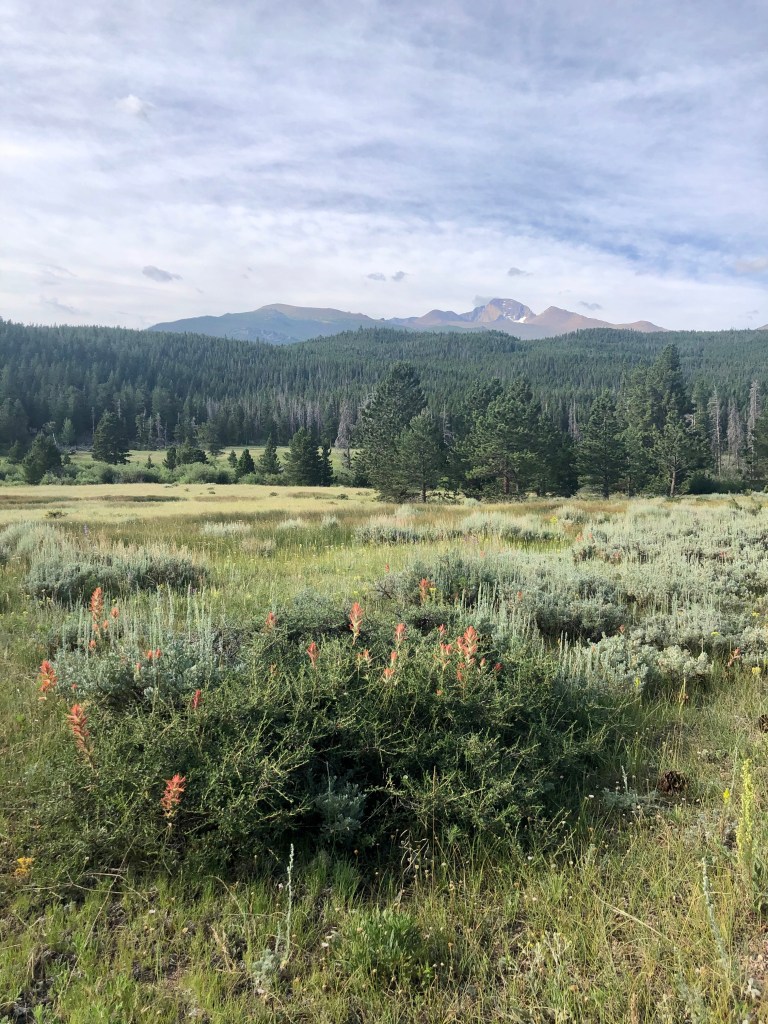
The first section of the trail takes you through an open valley with views of Longs Peak. This could be a hot section of the trail during summer afternoons, but soon the path wraps around into a wooded area and follows along side Mill Creek.

We enjoyed the solitude this hike offered. Over the course of four miles, we passed less than a dozen fellow hikers.

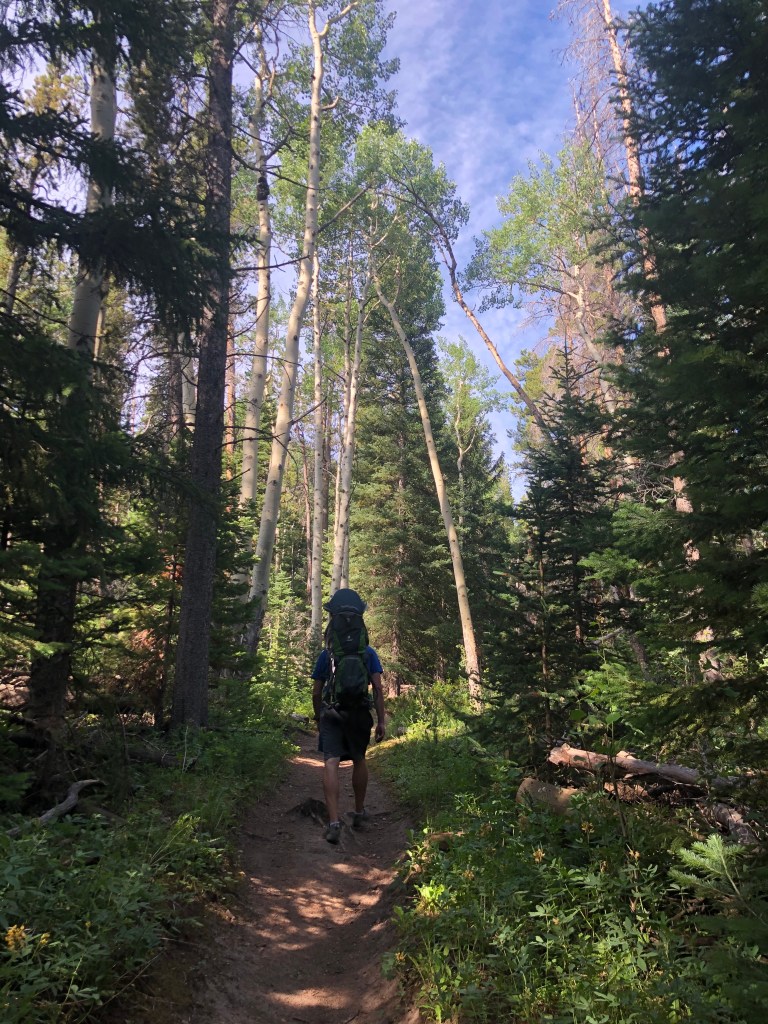
Towering aspens. Hollowell Park in Rocky Mountain National Park. To Mill Creek Basin. Loop trail
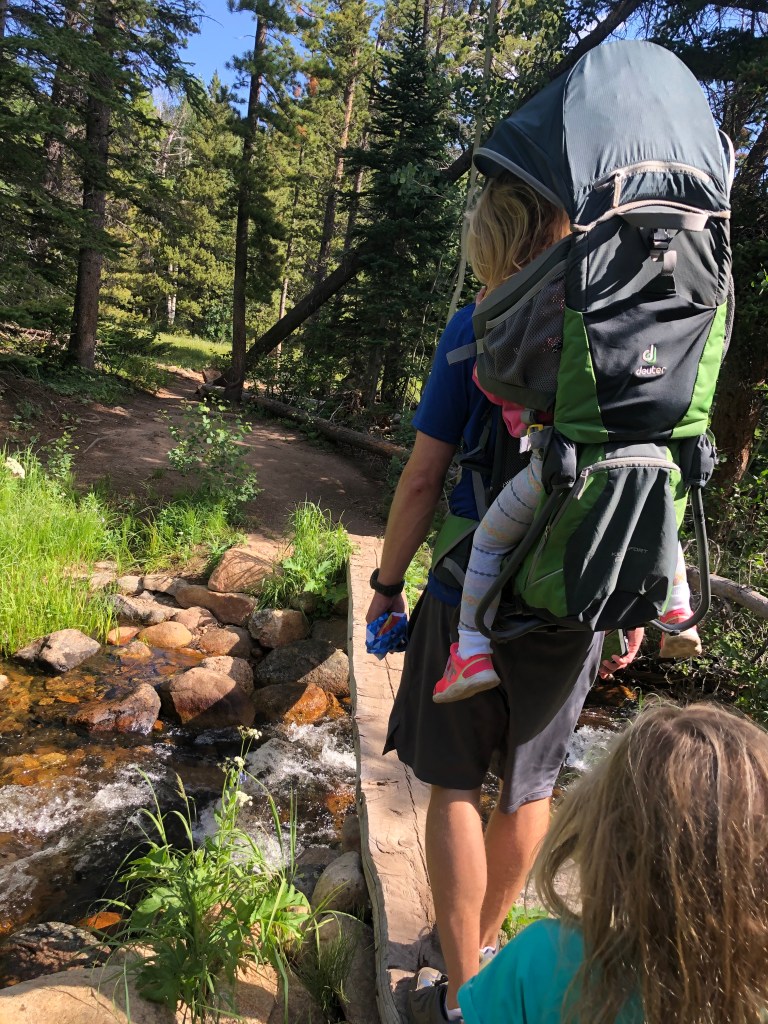
Besides some minor complaints during a couple of the uphill sections on the trail, our 5-year-old walked the trail on her own with a great attitude. Our 3-year-old rode in her kid carrier.

Wildflowers blooming by Mill Creek. Hollowell Park in Rocky Mountain National Park. To Mill Creek Basin. Loop trail

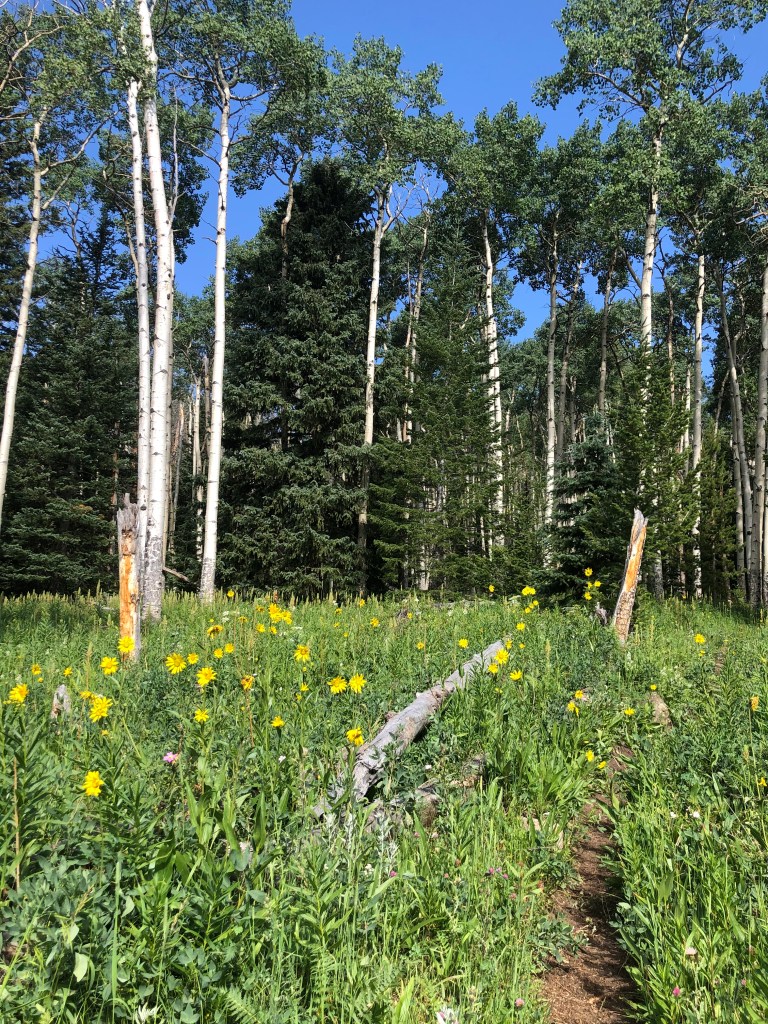
A variety of wildflowers bloomed near Mill Creek and in the open fields.

Crossing Mill Creek. Hollowell Park in Rocky Mountain National Park. To Mill Creek Basin. Loop trail
Wilderness Camping at Mill Creek Basin

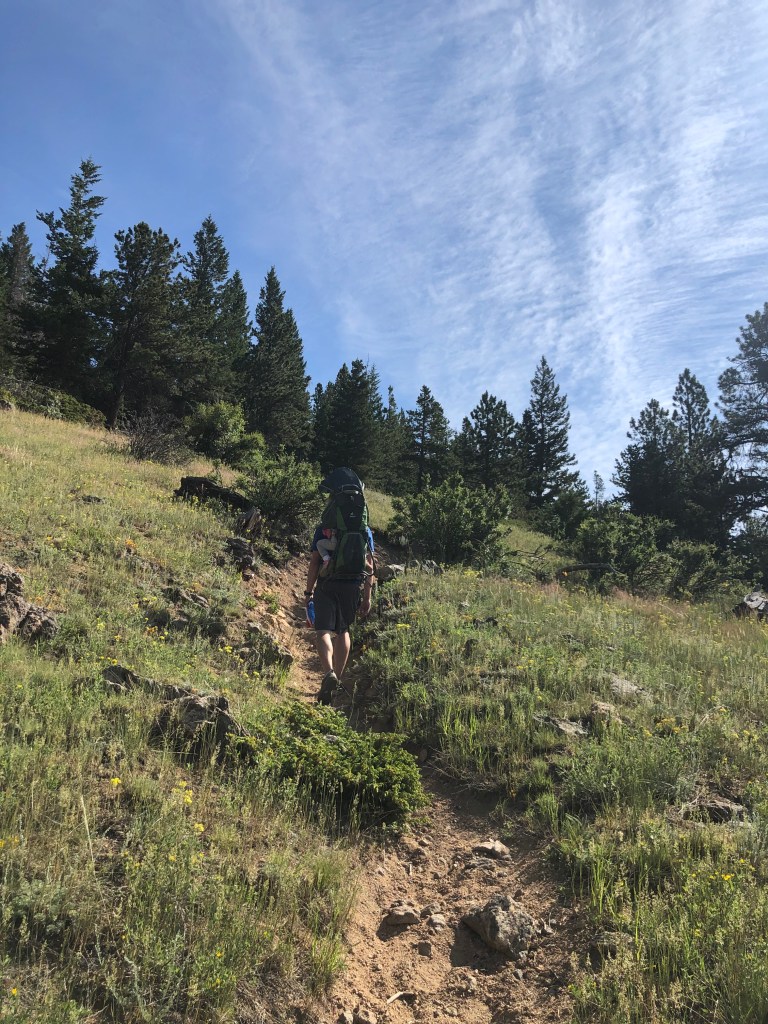
Half way through the hike (or 2 miles from the trailhead) we crossed into the Mill Creek Basin. There are two wilderness camping spots available in the Mill Creek Basin. The National Park Service offers a map of all the wilderness campsites in the Bear Lake area including Mill Creek Basin. Additional information about permits and regulations can be found on the national park service’s website.

Hollowell Park in Rocky Mountain National Park. To Mill Creek Basin. Loop trail
Mill Creeek Basin
Hollowell Park in Rocky Mountain National Park. To Mill Creek Basin. Loop trail
Uphill section with narrow trail
Hollowell Park in Rocky Mountain National Park. To Mill Creek Basin. Loop trail
Mountain views
This section of the trail was steep going downhill (if following the direction we came).
Hollowell Park in Rocky Mountain National Park. To Mill Creek Basin. Loop trail

If you are looking for a backup plan hike, a hike that’s less crowded, or a hike with gorgeous wildflowers, I highly recommend giving this loop around Mill Creek Basin a shot. Let me know if you do and what you think!

Want a bigger challenge? This trail connects to several popular destinations in the park including Cub Lake, Bear Lake, and Bierstadt Lake.

Our original post about Hollowell Park is called A Trail Less Traveled: Hollowell Park to Mill Creek Basin in Rocky Mountain National Park.

Featured Hiking gear – Trekking poles

Trekking poles – I wish we would have brought trekking poles for the steep downhill section of this trail through the elm trees. I typically don’t have knee issues, but sometimes hiking downhill is hard on my joints and I think the poles help absorb the extra pressure. Trekking poles also come in handy if there are any snowy patches along the trail.

*contains affiliate link.

Where is Rocky Mountain National Park? And Answers to Common Questions

I often get so excited about finding new restaurants in Estes Park or trails in Rocky Mountain National Park, that I forget some people are traveling to our favorite town for the very first time and need to know the basics. This post is dedicated to answering common questions for first-time visitors.

Where is Rocky Mountain National Park?

Rocky Mountain National Park is located in the state of Colorado.

What towns are near Rocky Mountain National Park?

Estes Park, Colorado is a mountain town that sits on the eastern side of Rocky Mountain National Park. Estes Park is approximately a one-and-a-half hour drive from Denver, Colorado and less than an hour drive from Boulder, Colorado.

Grand Lake, Colorado sits on the western side of Rocky Mountain National Park and is approximately a two-hour drive from Denver, Colorado.

Traffic in the Denver area can dramatically affect drive times, so I recommend timing your trip to avoid rush-hours if possible.

What is the elevation in Estes Park and Grand Lake?

Estes Park is at 7,522 feet in elevation. Grand Lake is even higher at 8,369 feet. At these elevations, it is good to keep in mind that your body needs time to acclimate. We have found altitude affects each person differently – some people have only minor issues adjusting while others may experience altitude sickness. We try to stay hydrated and find lower elevation hikes that are less strenous on the first day of our trip.

What is the weather like in Rocky Mountain National Park?

Summer: One of the best parts of traveling to the mountains in the summer months is the cooler temperatures and lower humidity (compared to our home in Arkansas). Mornings and evenings are often cool. Afternoon highs can reach into the 80s. Afternoon rain showers are common.

Fall: Crisp fall days, golden aspens, and the elk rut make autumn a wonderful and popular time to visit Rocky Mountain National Park. It can snow in the fall as we learned during an October trip where we ended up doing more sledding than hiking.

Winter: Winter is less busy in Rocky Mountain National Park compared to summer and fall prime months. Temperatures are cold, but on sunny days we have found it comfortable to hike, go sledding, and snow shoe as long as we bring warm layers. Some days the winds are extraordinarily strong which makes it less enjoyable. The town of Estes Park sparkles with holiday lights.

Spring: Snow and snow melt are common in spring. When we want to hike we typically visit lower elevation areas where the snow has melted out. Often the trails are slushy and muddy in spots. We bring trekking poles and fresh shoes to change into when we are done with our hike.

Additional tips about weather conditions in Rocky Mountain National Park can be found on the national park’s website.

I hope this is a good start. I’ll answer more common questions in upcoming posts mixed in with new hikes that we enjoyed from our most recent trip. If you have any questions I should cover in our next post, please ask them in the comments.